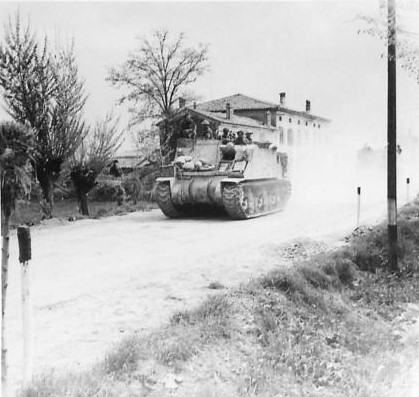
In the years before the 1939‑45 War, the London Irish Rifles was recruited from Irishmen or men of Irish descent living in London. When war came, many men from London, from Northern Ireland, and from Eire joined the Regiment voluntarily but, as the war went on, Army Class men were drafted into the two battalions from all parts.
War took its toll, and although both battalions received men from Irish regiments as reinforcements, most of the recruits came from a great diversity of English county regiments, and also regiments in Scotland and Wales. Men of all ranks banded together smoothly and admirably. They took a pride in their Regiment. They became imbued with its spirit; they admired its past accomplishments and cherished its traditions. They were all ordinary men of the town and of the country; they had no claim to fame or high ambition. In peace they bore no hate, in war they knew no fear.
This is their story. It has been compiled by a former member of the 1st Battalion, and has been drawn from official records and other sources. It is an unembellished and simple story of men in battle; of brilliant success and also of gallant failure.
Many survivors of the war have given their aid in preparing the history, and I wish to acknowledge in particular the help and assistance I have received from: Brigadier IH Good, DSO, formerly Commanding Officer of the 1st Battalion; Brigadier Nelson Russell, DSO, MC; and Brigadier TPD Scott, CBE, DSO, both formerly Commanding the 38th (Irish) Brigade; Lieut‑Colonel the Viscount Stopford, MBE, Commanding Officer of the London Irish Rifles as it exists today; Colonel TL Laister, formerly Adjutant of the 2nd Battalion; Major Colin Gibbs, MC, now Second‑in‑Command of the 1st Battalion; Captain Alan Mace, MC; Captain S Sharp; Captain JD O’Rourke, MBE; and all the officers, warrant officers, non‑commissioned officers, and men of both battalions who have placed information at my disposal.
Published on behalf of the London Irish Rifles Old Comrades’ Association, Duke of York’s Headquarters, Chelsea, 1948.
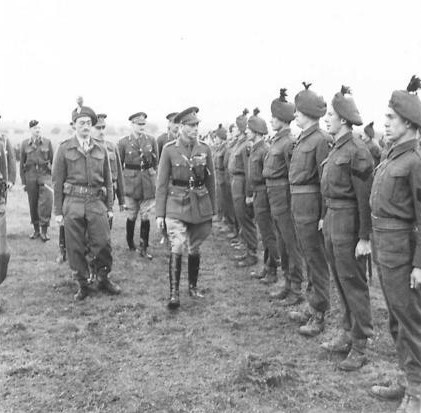
“In April 1939 the order came to double the Territorial Forces, and the London Irish was one of the first units to reach full strength and then to complete its second line. That effort was made possible in so short a time by the keenness of the recruits themselves, together with the hard work of the members of the Regiment, past and present, who gave up much of their time to enrol the recruits, and later to train them. Excellent work, too, was done by the women of the 15th County of London ATS, who were attached to the battalion, and included wives, sisters, and sweethearts of men of the Regiment. Those women did magnificent work in a thousand ways, and when in due time the two units were directed to their respective war stations, the Pipe Band of the London Irish Rifles proudly played the members of the ATS on their way. It was a gracious and well-deserved tribute….”
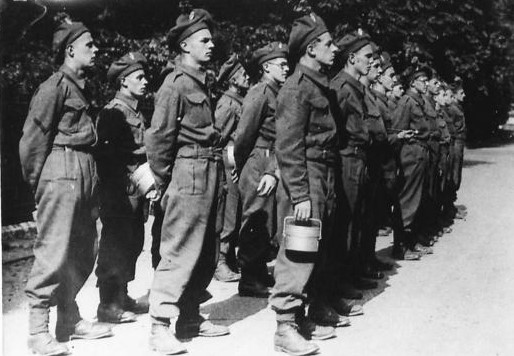
“It would not be long before the 1st Battalion would be on its way to one of the war fronts. Whither, was not known, but there were many guesses, ranging from North Africa to the Far East. The battalion received a number of new officers to bring it up to strength…”
“During this Goubellat Plain era, from December 15, 1942, to January 12, 1943, the weather was extremely bad and the employment of armour was out of the question. Three out of five days saw heavy rain. The troops in their slit trenches were often up to their knees in water, and the roads were nothing but mud-tracks and quite unfit for men or machines. There was no alternative, they had to be used…”
“The 1st Battalion London Irish left Kirkuk on April 1, and after a night in a transit camp at Baghdad they started a nine-day trek in lorries across the Trans-Jordan desert to Palestine. The long convoy passed through the Judean hills, across the Jordan, and thence through central Palestine past Beersheba, with its London Irish dead of the 1914-18 War, to the Suez Canal. Training in combined operations technique was carried out at Kabrit, a small Royal Naval station on the shores of the Little Bitter Lake. The work was hard but morale was high, especially when news came that the 2nd Battalion had acquitted itself very well in its initial battles in Tunisia…”
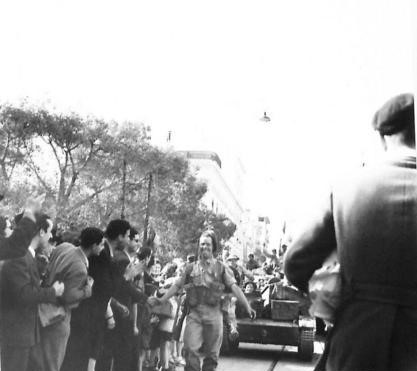
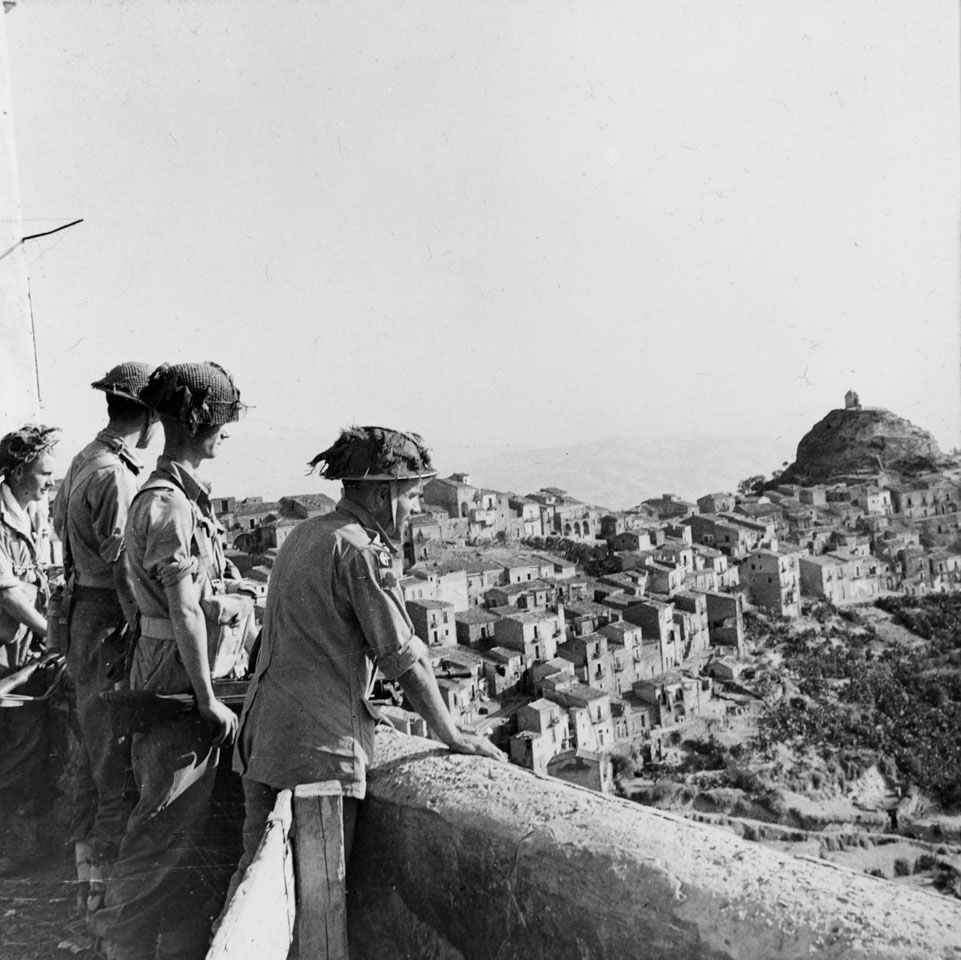
“The invasion of Sicily was a well-planned and boldly executed operation in which the sea, air, and land forces each played a vital and successful part. It was an operation which the Italians, at any rate, did not think could possibly succeed. The first landings by sea and air were made where they were least expected, and so surprised were the enemy that on the first day the landings were practically unopposed….”
“Good progress had been made by the two Armies by the time the 2nd Battalion London Irish sailed from Messina to Taranto on September 24. The short voyage was uneventful, and Taranto harbour in those early days was an extraordinary sight. It looked small and insignificant on approach, but on passing through a canal underneath an ancient swing-bridge the vast inland lake was revealed…”
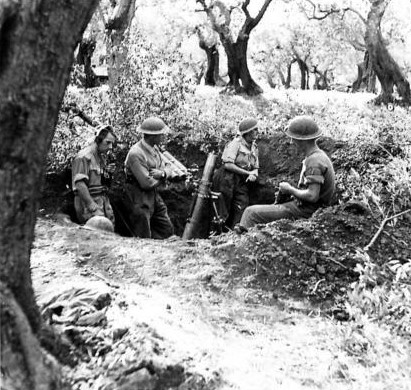
“Nineteen Forty‑Four was the bloodiest year of the war for the 1st Battalion: its ranks were sorely depleted by heavy losses on four occasions. First at Castelforte, in the period now to be recounted, twice at Anzio which followed, and then during the long, bitter struggle for the Gothic Line…”
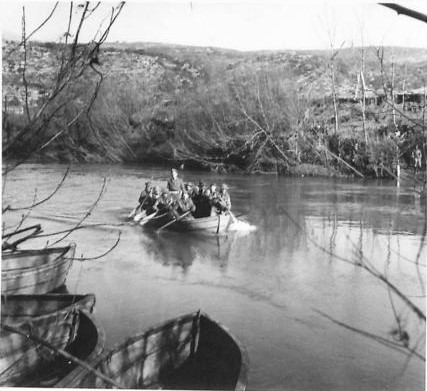
“In the whole area the Germans enjoyed unpleasantly good observation over the Allied positions though there was a fair amount of cover by the river-side, where the ground rose gradually from fifty to a hundred feet on each side. From above, the Monastery looked down on everything. It was an awesome sight, its medieval magnificence and splendour reduced to a gaunt, jagged skeleton, often obscured by rising ground mists or enveloped in the foggy brown swirl from smoke bombs…”
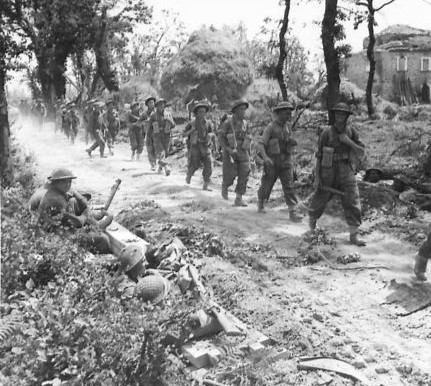
“While in the Rome area many officers and men of the battalion enjoyed visits to the Eternal City, and some were received by the Pope in the Vatican. The London Irish Rifles pipers and the bands of the two other Irish battalions in the brigade played in the precincts of the Vatican for His Holiness…”
“The centre of gravity in the fighting seemed to pass to the Eighth Army front by October 1944. With a little more strength the Allied Armies might have accomplished more in the attack towards the River Po before the autumn and winter rains set in, but it was revealed by General Alexander afterwards that some American and French Divisions had been withdrawn from Italy for the attack on the south of France and this had weakened his forces. To drive the Germans from the Po Valley during the winter could hardly be expected….”
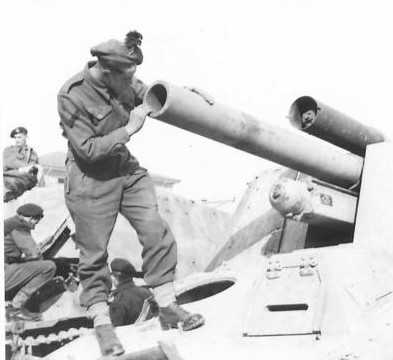
“On April 2, the 1st Battalion left its rest area and after an all-night drive through Forli and Ravenna concentrated at San Alberto, a little village on the south-west corner of Lake Commachio, where the Reno flows alongside the lake. The enemy were a mere one thousand yards away, and elaborate precautions had to be taken by the London Irish to keep their presence secret. That was a comparatively simple matter, owing to the Germans’ lack of aircraft and to the fact that though the ground was flat and swampy, there were sufficient buildings and cover to hide both troops and vehicles….”