Captain Ernest May wrote the story of the 2/18th London Regiment (2nd Battalion), London Irish Rifles during the First World War, from its formation as a new Battalion in the first few weeks of the war in 1914 until their dispersal during 1918. He was a Signal Corporal with the Battalion throughout the war and would later serve with the Regiment at home during the Second World War.
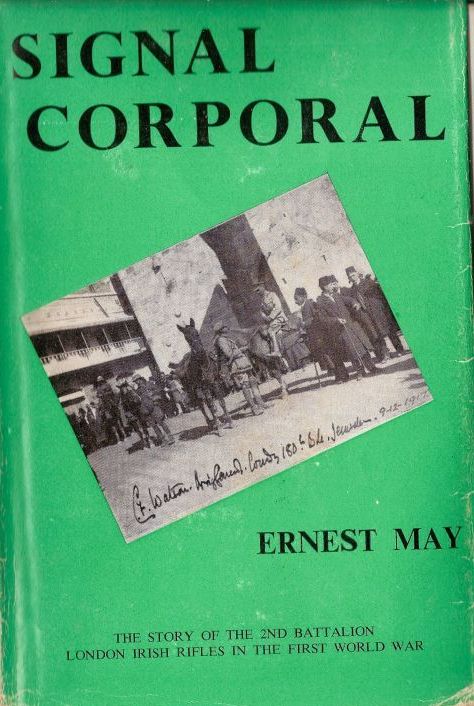
In 1926, the author was tasked by the Regimental Association with writing a history of the 2nd Battalion and was able to complete the book 46 years later in 1972.
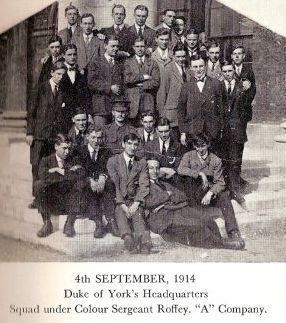
“On 31 August 1914, authority was received for the 2nd Battalion to be raised and it was complete on 5th September. The number enlisted was 1,050 and a few officers and colour sergeants were lent to us by the 1st Battalion…”
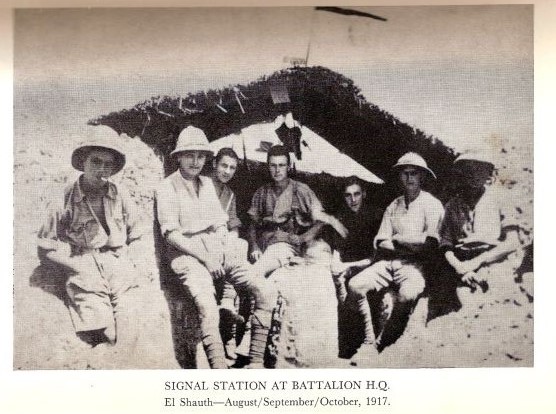
“We landed at Alexandria and entrained for Ismalia where we were settled in at Moscar Camp on 13th June 1917. Coming from the harsh conditions of Macedonia, in Egypt, we found condition of such comfort as could perhaps not be equaled anywhere else where our army was engaged. Moscar, itself, was a permanent camp of tents with ample accommodation for everyone and water to be had by merely turning on a trap. Melons and fruit in abundance and in great variety and ideal swimming in Lake Timsah only a short distance away…”
“On 26th November, the London Irish relieved the 7th Royal Scots of the 52nd (Lowland) Division at 0300 about 1,000 yards from Nebi Samwil – near the small village of Biddu…”
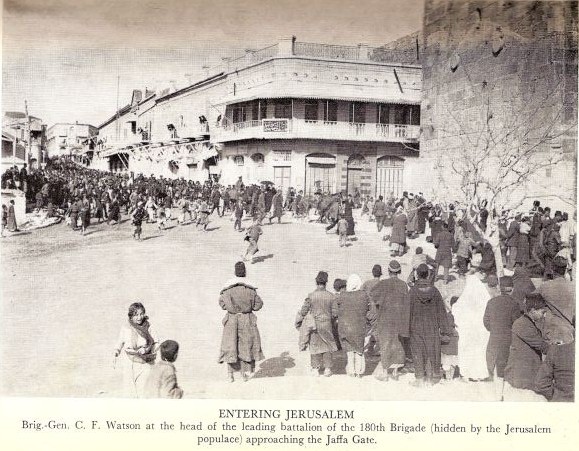
“We enjoyed a few days of peace until 4th January, when we were relieved by the 6th Royal Welsh Fusiliers of the 53rd Division and marched via Shafat to El Aziriyeh, the ancient Bethany. This is on the east side of Jerusalem, just round the southern shoulder of the Mount of Olives…”
“Before this long digression, we left the 2nd London Irish in the Ghoraniyeh Bridgehead on the night of 4th/5th May.
After spending the first part of the night there, we left at 0315 for Anzac Dump near Jericho, where we had the rare luxury of travelling by motor trucks to a camping area near the northern outskirts of Jerusalem. We were then “resting” for 24 hours – and we were ready for it…”