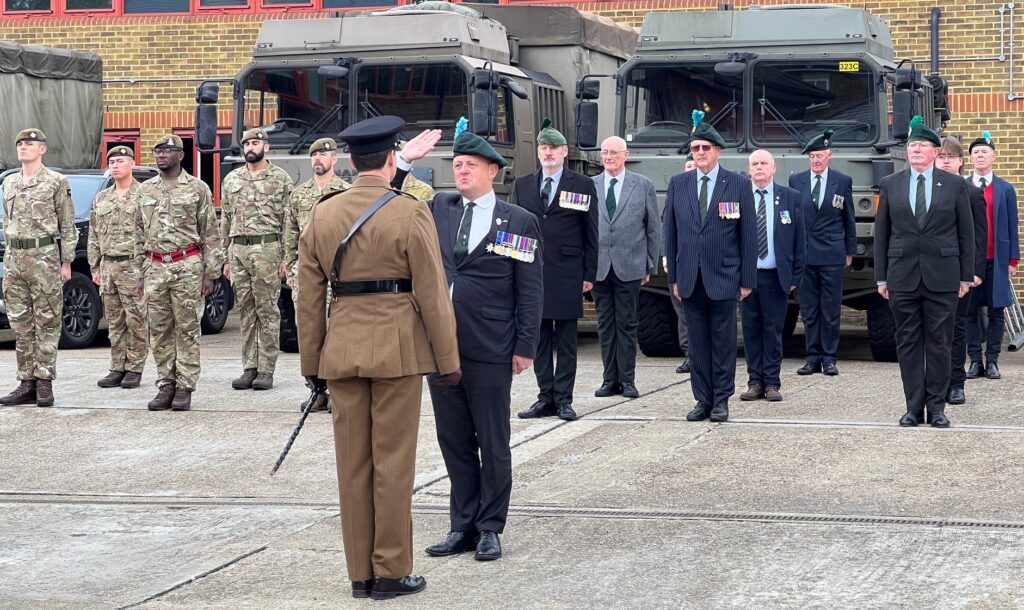
We are now looking forward to the Association’s Pilgrimage to Loos-en-Gohelle to commemorate the 110th anniversary of the start of Battle of Loos in September 1915. Our pilgrimage will take place from 26 to 28 September 2025 and a full detailed itinerary has been shared with attendees.
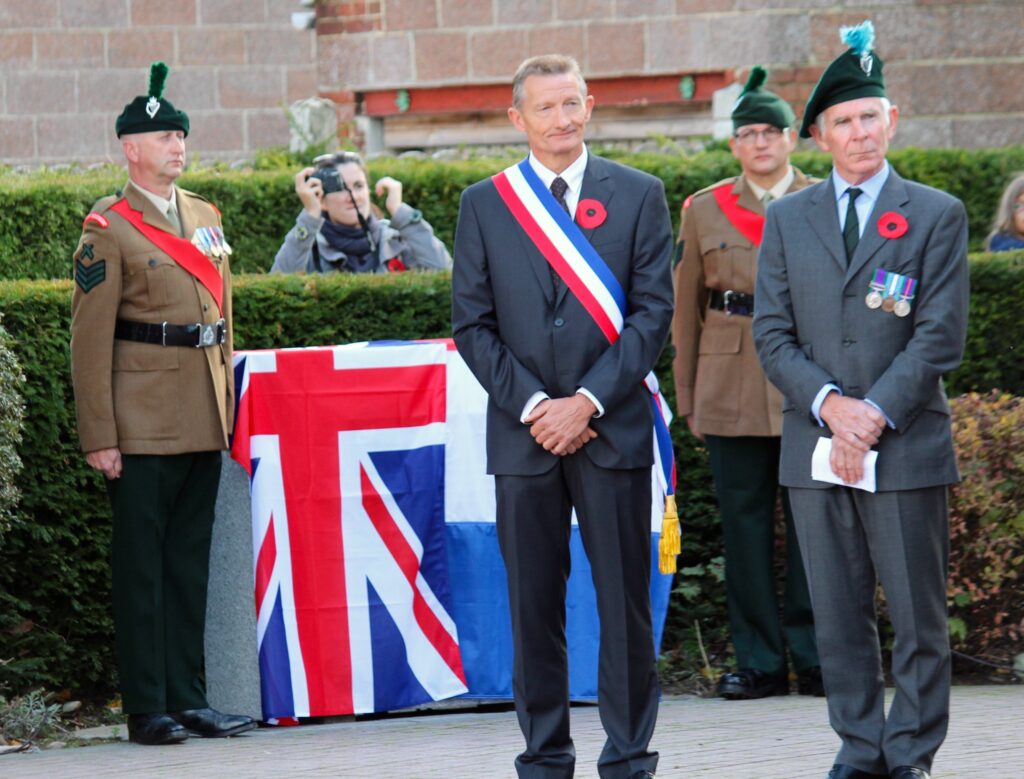
Please do also note that we are planning to open a web-site based process for the ordering a small number of Association items and you can find more details via this link.
Lieutenant Colonel (Retd) Ant Maher VR
Chairman of the London Irish Rifles Association
QUIS SEPARABIT
How to join the Regimental Association
Email: membershipsec@londonirishrifles.com
Continue to keep in close contact with us by regularly visiting this website and coming along to one of our Parades.
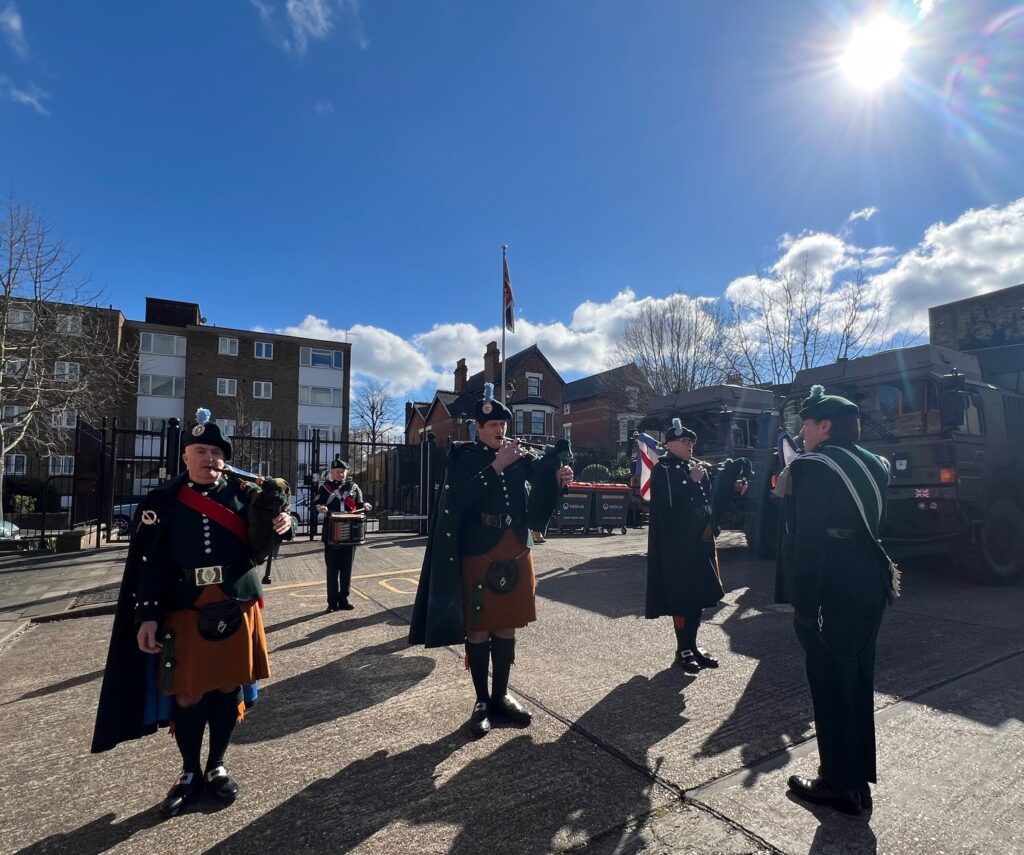
See photographs from all recent Events
THE PIPES AND DRUMS
The Pipes and Drums perform at Association parades to commemorate St Patrick’s Sunday, the Combined Irish Regiments, Loos Sunday and Remembrance Sunday.
You can contact the Band President by eMail: bandpresident@londonirishrifles.com
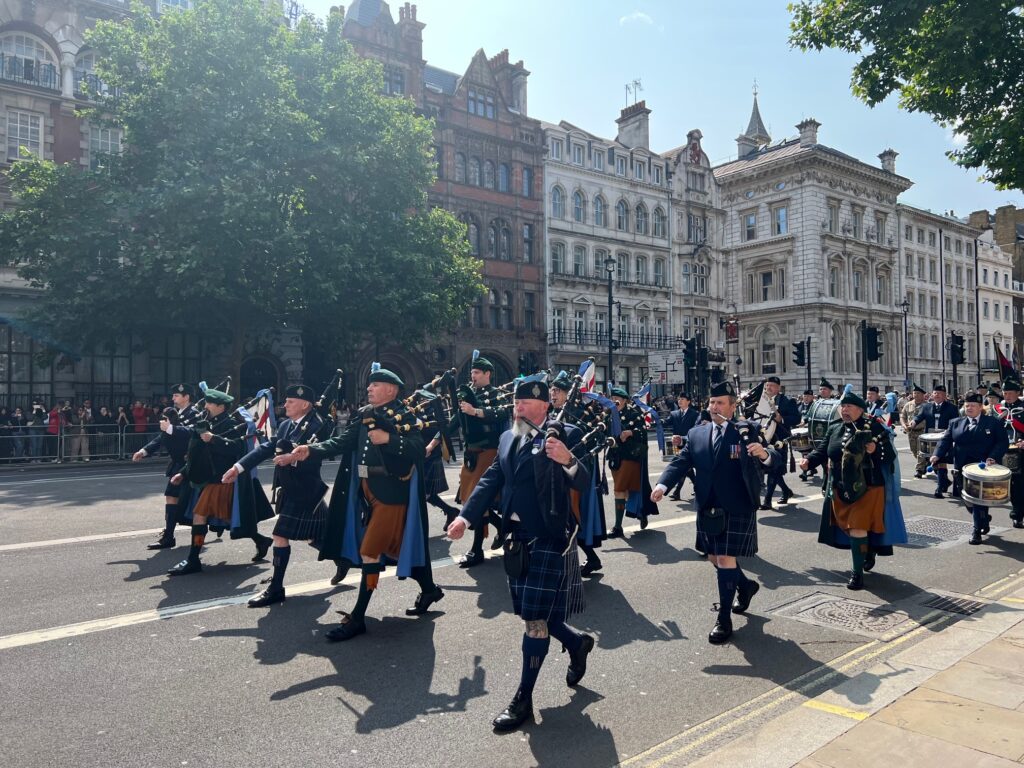
Read more about the Pipes and Drums of the Association
REGIMENTAL HISTORY
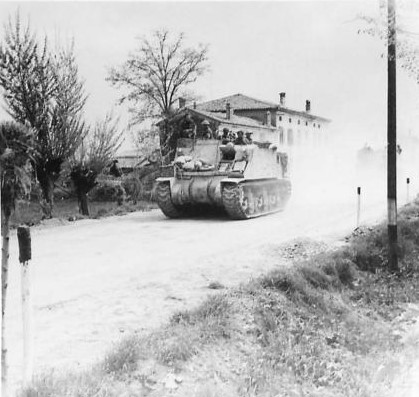
Find out more about the history of the London Irish Rifles
The Battle of Loos, September 1915.
LONDON IRISH RIFLES MUSEUM
As of March 2025, the Museum is currently closed to visitors but if you do have any questions or to want learn more about the history of the London Irish Rifles please contact us on: webmaster@londonirishrifles.
Find out more about the Museum’s activities
The London Regiment – 1993 to 2022
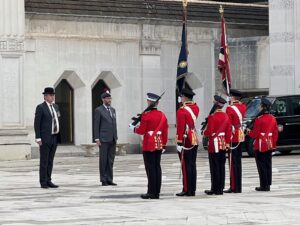
Following the incorporation of the London Irish Rifles as a company of the London Regiment in 1993, men from D Company company served in The Falkland Islands, Bosnia, Kosovo, Sierra Leone, Northern Ireland, Iraq, Afghanistan and Cyprus over the subsequent 30 years.
During Operation Telic, the company contributed to the formation of Cambrai Company (Operation Telic 3) and Messines Company (Operation Telic 4) alongside numerous individual postings and there were also a number of small group mobilisations throughout the conflict in Iraq.
Soldiers from D Company also deployed to Afghanistan with Somme Company in 2007 (Operation Herrick 7), Amiens Company in 2010 (Operation Herrick 12) and Arras Company in 2011 (Operation Herrick 13) as formed units within Guards’ Division formations.
NO 15 (LOOS) COMPANY, IRISH GUARDS
On 1st May 2022, the London Regiment became 1st Battalion, London Guards and D (London Irish Rifles) Company now forms No 15 (Loos) Company, Irish Guards.