Home » Second World War » The Story of 38 (Irish) Brigade, 1942 – 1947 » War Diaries – Daily Brigade/Battalions

War Diaries – Daily Brigade/Battalions


A day by day consolidation of the war diaries of the Irish Brigade HQ and the three individual rifle battalions following their journey from Algiers to Austria.


November 1942

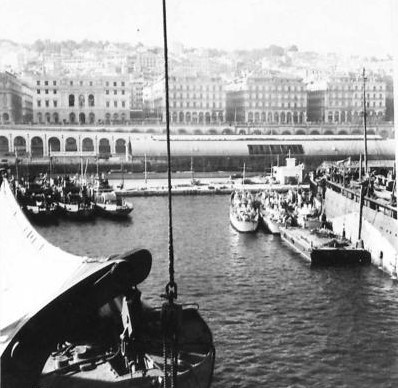
On route to North Africa – the Skins and Irish Rifles arriving in Algiers.

General view of Allied-occupied Algiers taken from the Royal Navy transport ship HMT Orion, 23 November 1942.

December 1942

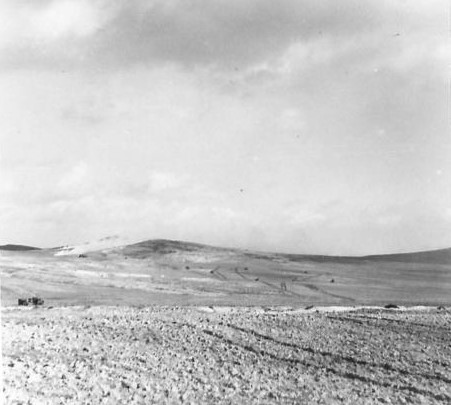
In the line on the Goubellat Plain.

Operations in Tunisia continued and the British First Army was engaged at Longstop Hill east of Medjez-el-Bab. Bad weather was also experienced around that time and mud hampered large scale movement by heavy vehicles, 25 December 1942.

January 1943

All 3 battalions of the Irish Brigade fighting at Two Tree Hill, Grandstand and Hill 286.

A forward observation post held by the Germans was known as ‘Two Tree’ Hill as on its highest point two trees grew. It was important to take the hill as it had advantageous position commanding all the approaches for many miles around, 10 January 1943.

February 1943

Battling defence on Stuka Ridge and the Irish Brigade beating off a major German attack against its positions.

British troops search a German prisoner, 27 February 1943.

March 1943

Withdrawn from the line and resting and an extensive reorganisation at Beja.

A Mule Train moving into the hills along a narrow track, 10 March 1943.

April 1943

Assaults on the Djebels north of Medjez-el-Bab at Jebel Mahdi and then at Ang, Tanngoucha and Heidous.

After a violent assault by artillery and mortar fire, the mountain village of Heidous was secured on Easter Sunday. The village is little more than a heap of ruins and here personnel of the RAMC are searching the remains of the houses for casualties, 27 April 1945.

May 1943

Entering Tunis and joining the 1st Army Victory Parade in the city centre.

General Alexander chatting to General Juin at the Victory Parade, 20 May 1943.

June 1943

Resting and renewed training in Guelma in Algeria.

At 1800 hours, the Pipes and Drums of the 38th Irish Infantry Brigade under Pipe Major Evans and wearing traditional dress, played the Retreat and several Irish Airs before an audience of Officers and Men of the Brigade and British nurses from a nearby Military Hospital near to Guelma, 2 June 1945.

July 1943

Returning from Algeria to Tunisia before crossing to Sicily with 8th Army in the last week of July.

First wave of British troops in a landing craft assault nearing the beaches of southern Sicily (LCA), 9 July 1943.

August 1943

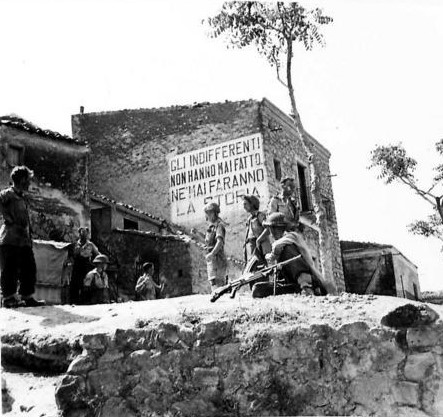
Fighting advance from Centuripe to Randazzo. The Irish Brigade’s leading role in the 78th Division’s advance from Catenanuova through Centuripe, over the Salso and Simetto rivers and then on to Maletto, its final major engagement of the Sicilian campaign.

Bren gun position on outskirts of Centuripe, 3 August 1943.

September 1943

At rest at Patti and then moving onto Taranto laler in the month.

Convoys come and go continuously and a steady stream of vehicles and supplies leave the Taranto docks daily for the front, 23 September 1943.

October 1943

From Termoli to the Trigno.

Rfn. J. Furnell of Southampton, the smallest and youngest man in the 2 LIR and incidentally the battalion mascot, with Rfn. Swift of Manchester, manning a machine gun built from the parts of five captured enemy guns – ‘E’ Coy near to Termoli, 13 October 1943.

November 1943

From San Salvo to the Sangro.

Transport is one of the greatest problems on a shallow front overlooked by the enemy. Vehicles are here seen clustered along the base of the escarpment, below Mozzagrogna, 29 November 1943.

December 1943

Fighting adavances to the Moro River before moving back to rest for 3 weeks at Campobasso.

Rfn. W.E. Tudor, S Coy., A/Tk PI.2 Btn. London Irish of Birkenhead, inspects a German anti-tank weapon abandoned at Rocca S. Giovanni. It was a 37 mm gun which fired a heavy bomb of the type seen on the ground besides the gun, 3 December 1943.

January 1944

In the snowdrifts near Castel di Sangro.

General Sir Oliver Leese talking to Major E.D. Danby of Vancouver, Carleton and Yorks Regiment, Brigadier Gibson and General Allfrey are seen in the picture, 7 January 1944.

February 1944

At rest, awaiting the call to join the assaults on Monte Cassino.

The heavy bombardment of the Monastery and its environs as seen from a forward O.P., 15 Febuary 1944.

March 1944

Barrosa Day and St Patrick’s celebrations out of the line.

The scene at night, an awe-inspiring spectacle, as the molten lava from Vesuvius spreads over the mountainside, 22 March 1944.

April 1944

On top of Monte Castellone.

General Charles Keightley, the CO of the British 78th Infantry Division and General Wladyslaw Anders discussing positions on a map outside General Keightley’s dugout. They are accompanied by Lieutenant Eugeniusz Lubomirski, General Anders’ adjutant, 5 April 1944.

May 1944

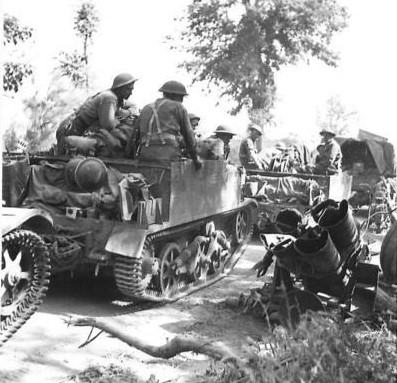
Breaking the Gustav Line and advancing to Ripi..

Mortar carriers of 1st Royal Irish Fusiliers pass a wrecked German Nebelwerfer rocket launcher near Ceprano, 28 May 1944.

June 1944

Heading north of Rome to Lake Trasimene.

Infantry of the 6th Inniskillings and a Sherman tank advance through Pucciarelli, 25 June 1944.

July 1944

To Egypt.

The news is read everywhere – even while having a shoe-shine. The Victor Emmanuel II memorial can be seen in the background, 6 July 1944.

August 1944

Welcoming the 2nd Skins to the Irish Brigade at Sidi Bishr.

A South African soldier is plied with questions by the crowd in newly-liberated Florence, 3 August 1944.

September 1944

Back to Italy and onto re-join 5th Army at the Gothic Line.

A smoke screen laid to cover the movements of American transport with 5th Army as they advance along the road to Firenzuola, 26 September 1944.

October 1944

Fighting battles with 5th Army north of Florence at Monte Codranco and Monte Spaduro.

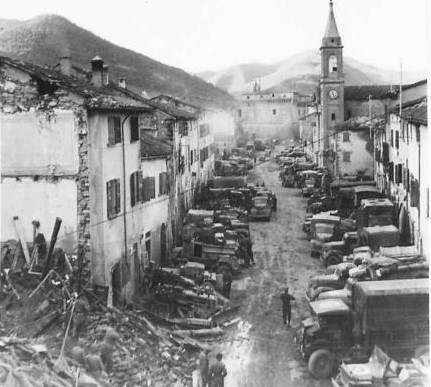
In spite of enemy shellfire, every possible parking space in Castel Del Rio is occupied by vehicles of all kinds, 20 October 1944.

November 1944

Still in the mountains with 5th Army and moving to the San Clemente areas.

REs and Infantry from 78th Infantry Division digging a deep channel along the edge of the log road to drain off rain water, 17 November 1944.

December 1944

Christmas in the snowdrifts and raids on Casa Tamagnin.

A view of Castel Del Rio, an important junction on the 6 (Br) Armoured Division and 78 Division axis, covered with snow, 23 December 1944.

January 1945

Continuing raids in the mountains and readying for relief..

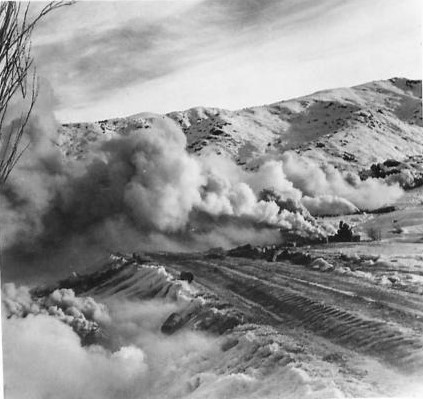
The stretch of valley through which runs the river Sillaro and the road to S. Clemente, a village well within range of enemy shellfire, is covered by a smoke screen. This screen is maintained by men of the 53rd L.A.A. Regiment, R.A., who work about 1,000 yards from the nearest enemy, 22 January 1945.

February 1945

Cleaning up in Forli after 4 months in the Apennines.

General Keightley addressing the parade of Italian soldiers, 4 February 1945

March 1945

The Senio Floodbanks and celebrating St Patrick out of the line in Forli.

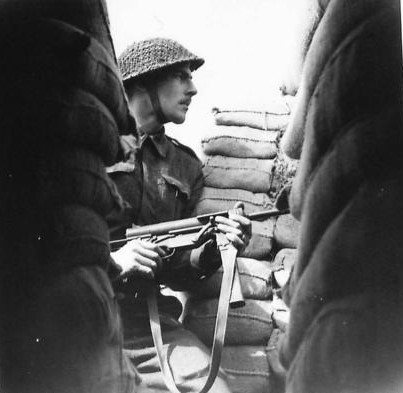
Rfn. Bernard Brister of 12 Syon Lane, Isleworth, Middx of 2 LIR keeps watch from a dugout near the Senio, 17 March 1945

April 1945

Advancing from the Santerno river to Argenta and onto the Po for Final Victory.

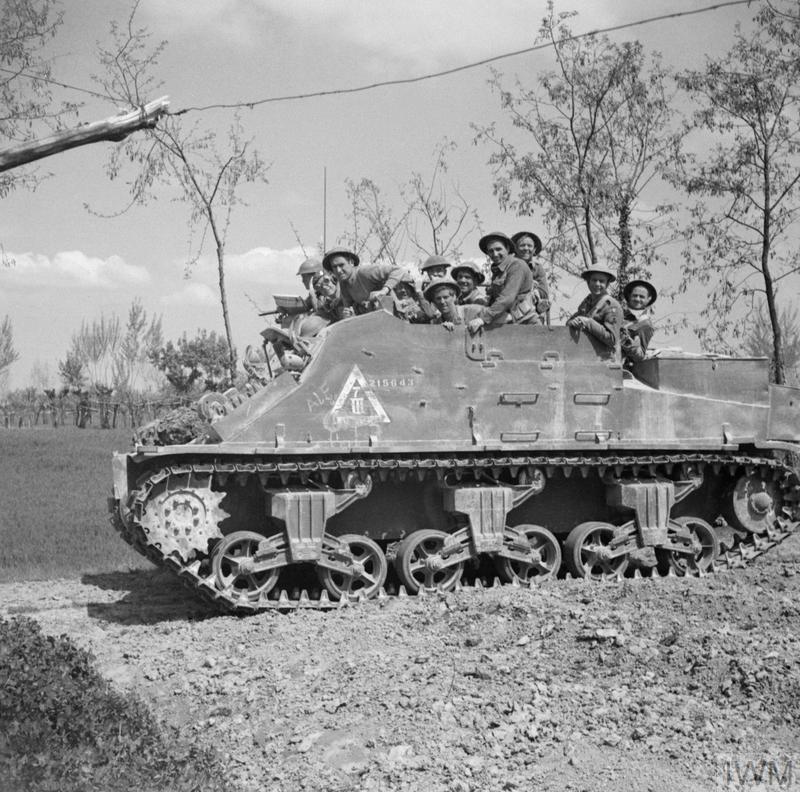
A Priest Kangaroo personnel carrier of 209th Self-Propelled Battery, Royal Artillery, transports infantry of 78th Division near Conselice, 13 April 1945.

May 1945

Into Austria and securing borders.

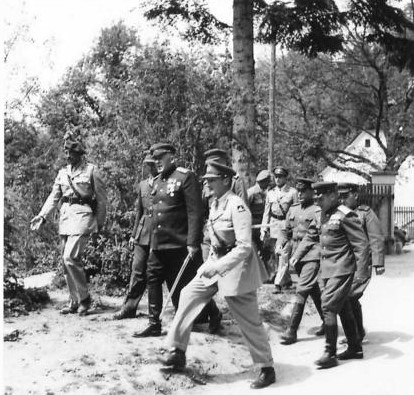
The Russian General and his staff walks with Lieut. General Keightley and Lt Colonel Bredin towards Btn. H.Q., 2nd London Irish Rifles, 12 May 1945.