The History of the 47th (London) Division, 1914-1919 by Maude, Alan H
March 1915 to February 1916
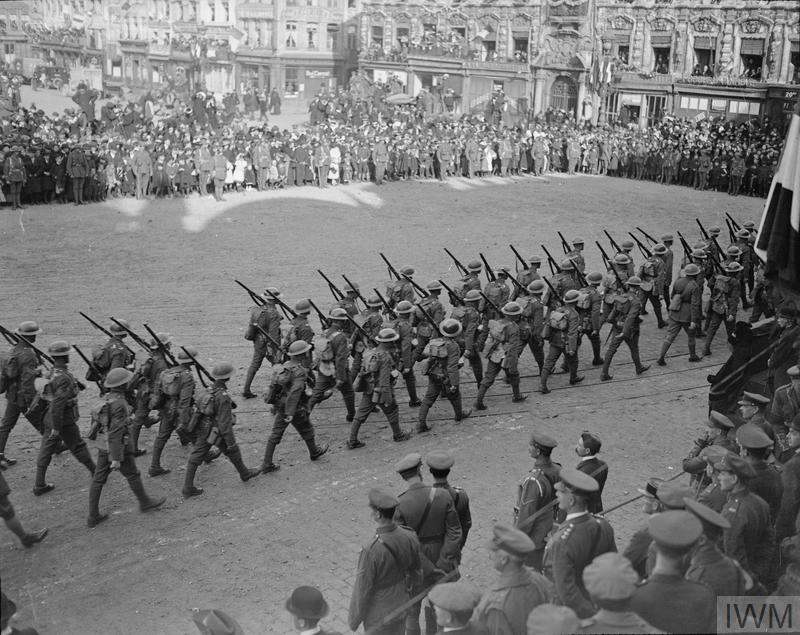
Throughout the winter of 1914-15 a number of Territorial battalions were serving in the trenches in France and Flanders, but serving as single units attached to brigades of the Regular Army. By March, 1915, the time had come for the Territorial Force to take the field, and serve in its own divisions.
The North Midland Division (afterwards the 46th) and the 2nd London Division led the way. To the former belongs the honour of being the first Territorial Force Division to cross to France, and they were instantly followed by the 2nd London. On March 9th and 10th, 1915, General Nugent’s brigade, consisting of the 17th, 18th, 19th, and 20th Battalions the London Regiment, crossed from Southampton to Havre and moved up to Cassel, as the Division was destined for the Ypres salient….
April 1916 to August 1916
The armies of our Allies and of our enemies developed likewise. But the Boche was still ahead of us, and the new methods first appeared in the storm that broke at Verdun on February 21st. On that fateful day the Division was grazing in the pastures of G.H.Q. reserve — cold comfort, for the ground lay deep in snow, and brigades sent successively for training to the Bomy area found it impossible for the next fortnight to accomplish much in the way of training…
September 1916 to February 1917
Between September 10th and 12th we relieved the 1st Division in the High Wood sector.
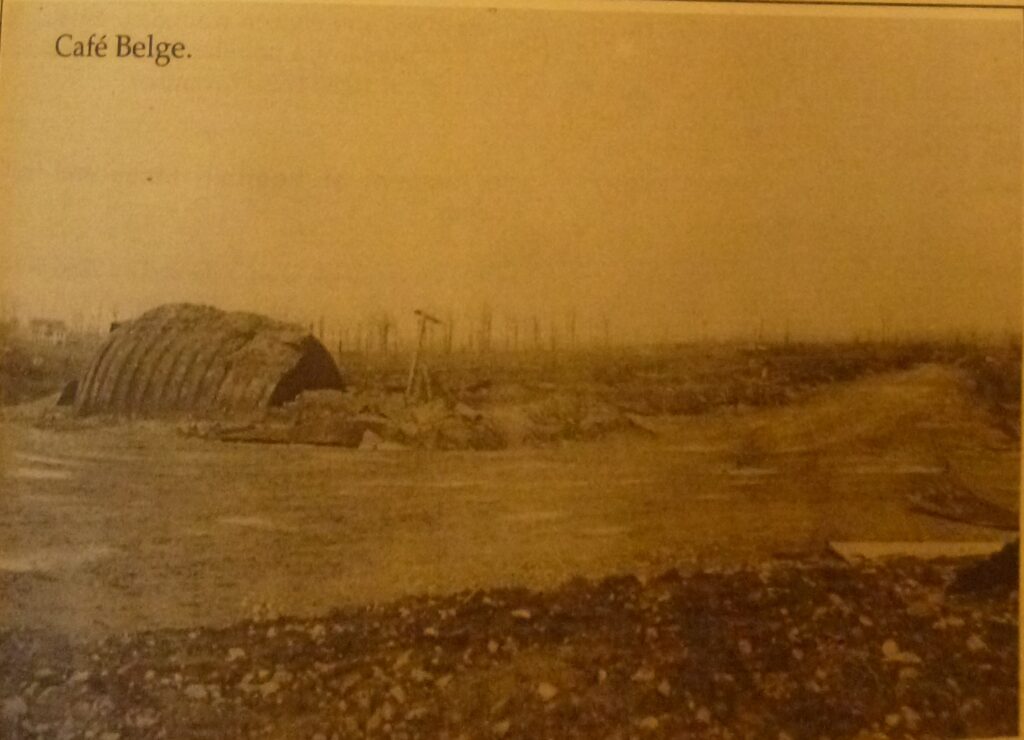
We walked into a new world of war. We passed through Albert for the first time, under the Virgin, holding out her Child, not to heaven but to the endless procession below. Fricourt, where the line had stood for so long, was now out of range of any but long-range guns, and we could see freshly devastated country without being in the battle. All round the slopes were covered with transport of all kinds, and whole divisions of cavalry waiting for their opportunity…
March 1917 to November 1917
On March 15th, the enemy, suspecting that the railway was being used to bring up timber and stores, heavily bombarded the neighbourhood of Zillebeke Halt, destroying the track for some three hundred yards to the west of that place. On the 23rd, the 142nd Infantry Brigade moved back from Divisional Reserve to the training area at Tilques. Early next day a hostile aeroplane flying low was successfully engaged by a Lewis gun of the 20th Battalion and crashed behind the enemy support line, where it was ultimately destroyed by our artillery. Following on a very heavy trench-mortar bombardment which blew in all the tunnelled entrances in the craters, the enemy succeeded in entering them, but subsequently withdrew without securing any prisoners….
November 1917 to April 1918
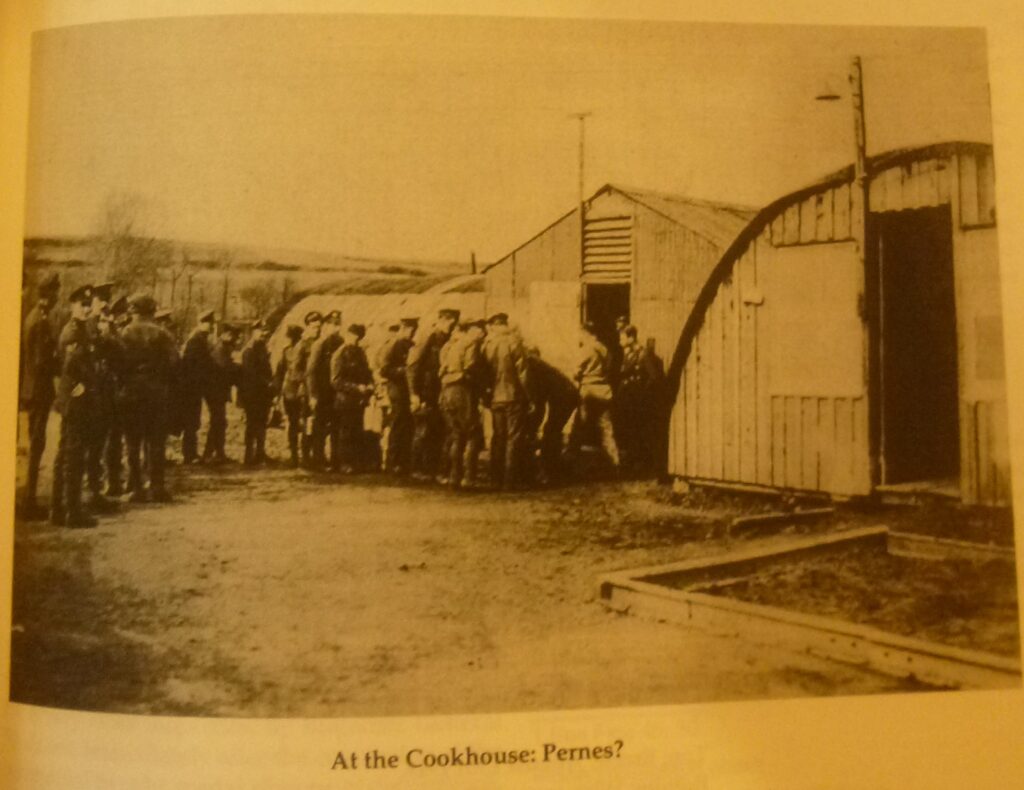
“Too good to last!” There spoke the cheerful pessimism of the “other ranks” when they heard that another move was imminent. For we had begun to assume a certain permanence in our positions on the Oppy front, and to regard them as affording the promise of a quiet winter broken only by a merry Christmas.
But by the beginning of November the field-kitchen, most fertile handmaid of rumour, was busy with strange stories of a journey to the far south…
May 1918 to 1919
The success of the German offensive at the end of March shocked the Government and the nation at home into seeing the urgency of the need for more men, and large reinforcements were hastily sent across the Channel,
During the first week in April, over 3,000 new troops, mostly boys of eighteen, joined the Division, and had a very uncomfortable first taste of active service in improvised camps in the muddy orchards of Rubempre. They were absorbed by the brigades on April 9th, when the Division began to move back by way of Beauval and Domart to a pleasant rest near the forest of Crecy…